


Drain & Drainage Installations in Raleigh, NC
Custom Residential Backyard Drainage Solutions for Raleigh Properties
At Conserva Irrigation of the Triangle, we provide comprehensive drainage solutions designed to help homeowners manage excess water and protect their property from long-term damage. Poor drainage can lead to standing water, soil erosion, mold growth, and foundation concerns.
Every property has different drainage challenges. Factors such as grading, soil composition, landscaping, and existing hardscapes all affect how water moves through a yard. Our trained technicians assess your property to identify problem areas and recommend a drainage design based on site conditions.
Pooling water and saturated soil can develop when runoff isn’t managed correctly. During inspections, our technicians assess water flow patterns, slope grading, and soil absorption rates to design a drainage system that manages water while limiting disruption to lawns, gardens, and the areas around your home. Existing irrigation systems and landscape features are also considered so new drainage components integrate naturally into the overall property layout.
Schedule a consultation to discuss recurring pooling, erosion, or saturated soil. Connect with our team online or call (919) 584-9906.
Signs You Need Professional Yard Drainage in Raleigh
Standing water that remains for days after rainfall, soggy soil near foundations, and mulch washing into walkways can all indicate that the property isn’t draining properly. These symptoms don’t always point to the same cause. Surface runoff, groundwater, roof runoff, compacted soil, or an obstructed drainage path can each produce similar patterns, which is why a property-specific evaluation matters.
Other common indicators include:
- Water stains on basement walls.
- Mildew odors in crawl spaces or lower levels.
- Erosion around landscaping beds.
- Grass that struggles to grow in wet areas.
- Soil movement near patios or sidewalks.
- Water collecting near driveways or foundations.
When these conditions are left unresolved, they may contribute to foundation settling, landscape damage, and moisture-related issues inside the home. If pooling or saturated soil recurs after rainfall, especially near a structure or in heavily used yard areas, a professional evaluation is a practical next step.
How the Drainage Installation Process Works
Key steps in the installation process include:
- Initial evaluation: Technicians inspect the property, identify drainage concerns, and review water movement patterns, slope, and soil conditions.
- System design: Drainage routes, pipe placement, and discharge locations are planned according to grading and site conditions.
- Site preparation: Utilities are marked and work areas are prepared to reduce disruption to landscaping and hardscapes.
- Installation and testing: Pipes, drains, and catch basins are installed at the proper slope and tested for effective water flow.
- Cleanup and review: Disturbed areas are restored as much as possible, and the completed system is reviewed with the homeowner.
For properties with established landscaping or steep grades, installation methods may be adjusted to reduce disruption to outdoor spaces. Project duration varies with the complexity of the drainage problem, excavation requirements, system design, and restoration scope. Before work begins, we explain expected timelines, access points, and any temporary disruptions.
French Drain Installation, Catch Basins, & More
Different drainage systems serve different purposes. Selecting the right one depends on whether the primary issue is surface water, subsurface saturation, roof runoff, grading, erosion, or a combination of conditions. Our team evaluates rainfall frequency, soil conditions, property grading, and water-flow patterns before recommending a solution.
French Drains
French drains use perforated piping surrounded by gravel or aggregate to collect and redirect water away from saturated areas. French drain installation in Raleigh is a common solution for lawns, garden beds, and low-lying sections of a property where subsurface water accumulates. The trench-and-pipe design moves water horizontally through the soil rather than allowing it to pool at the surface.
Dry Creek Beds
Dry creek beds combine drainage function with landscape design. These channels use stone and grade changes to slow runoff, reduce erosion, and guide water through the yard in a visually integrated way. They work well on slopes or in areas where a buried pipe system alone wouldn’t address the full path of water movement.
Channel Drains
Channel drains are frequently installed near patios, driveways, and along hardscape edges. These grated surface systems capture sheet flow quickly and help limit pooling on paved areas before it reaches planted beds or structures.
Downspout Catch Basins
Catch basins collect roof runoff from gutters and redirect it away from the foundation through underground piping. Catch basin drain installation in Raleigh is a practical response when downspout discharge is contributing to saturated soil or erosion near the home.
Direct Pipe Installations
Direct pipe systems connect downspouts to underground drainage lines that carry runoff toward designated discharge points, removing roof water from the immediate area around the foundation.
Downspout Defender Catch Basins
These systems help prevent debris buildup in areas surrounded by trees while maintaining efficient water flow during heavy rain events.
Pop-Up Emitters
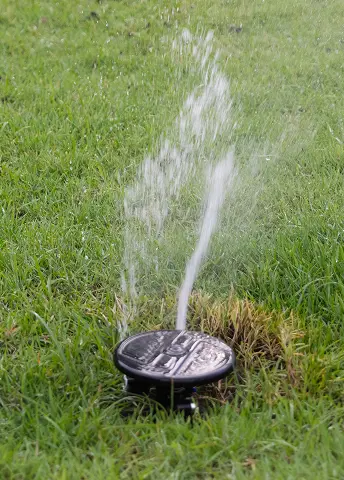
Pop-up emitters release collected water at a designated outlet point away from structures and landscaped areas once the underground drainage line reaches the discharge location. They’re commonly paired with direct pipe and catch basin systems.
Landscape drain installation in Raleigh often combines more than one of these systems. Our drainage designs can be coordinated with existing irrigation systems and landscaping so drainage components don’t interfere with watering zones or landscape features.
Local Compliance & Responsible Discharge
Drainage projects may be subject to local review depending on project scope, grading changes, proximity to drainage easements, or the nature of the discharge point. Before installation begins, we review applicable local guidelines and stormwater considerations for the site. Raleigh stormwater review can involve drainage plans, runoff calculations, and permitting depending on the scale of work and site conditions. Requirements vary, so we address this on a project-by-project basis rather than applying a blanket assumption.
Drainage planning should also account for avoiding negative effects on neighboring properties. We plan discharge routes to avoid redirecting water onto adjacent properties or creating a new drainage problem elsewhere on the site.
The Benefits of Professional Drainage Installation
Professional drainage installation can reduce recurring standing water, slow erosion, improve soil health in planted areas, and limit moisture exposure around foundations and crawl spaces.
Benefits include:
- Improved control of standing water and surface runoff.
- Reduced erosion and soil displacement around planted areas.
- Better lawn and landscape health in previously saturated zones.
- Efficient integration with existing irrigation systems.
- Durable materials designed for long-term performance.
- Post-installation guidance on seasonal maintenance and monitoring.
Directing runoff to appropriate discharge points and improving soil absorption can reduce unnecessary water loss while protecting the property. After installation, our technicians provide guidance on seasonal inspections, catch basin cleaning, and what to watch for following significant storms.
We back our work with a satisfaction guarantee and tailor drainage solutions to the specific conditions of the property.
Frequently Asked Questions About Drainage Installation
1. What types of drainage systems are available?
Available options can include French drains, channel drains, dry creek beds, catch basins, and underground piping systems.
2. Why should I choose a professional for drainage installation?
Professional installation helps ensure the drainage system is designed for the property’s specific conditions.
3. What should I do if I notice pooling water?
If standing water develops on your property, inspect gutters and downspouts to confirm they’re clear of debris. If water continues to collect after rainfall, a professional drainage inspection may be necessary to identify the cause and recommend corrective solutions.
What to Look for in a Raleigh Drainage Installation Company
When evaluating a drainage installation company in Raleigh, homeowners often consider:
- Local experience with regional soil and weather conditions.
- Comprehensive design and installation services.
- Quality materials and proven installation methods.
- Clear communication throughout the project.
- Long-term system reliability and maintenance guidance.
At Conserva Irrigation of the Triangle, we tailor drainage solutions to the conditions of each property while supporting efficient and dependable water management.
If recurring pooling, erosion, or saturated soil is affecting your yard, Contact us to discuss what you’re seeing. Connect with our team online or call (919) 584-9906 for a consultation.

-
Better Lawn Health
The drainage solutions that Conserva offers can stop unwanted mold and fungus from forming on and around the pooling water. Your lawn will be much healthier with a custom drainage project from Conserva.
-
No Standing Water
Working with Conserva on a drainage project can get rid of the standing water on your lawn, which can wreak havoc on your grass and attract annoying bugs. Get rid of any standing water today with a custom drainage project.
-
Satisfaction Guarantee
With our drainage services, your satisfaction is of the utmost importance. We want to make sure that you are in love with your custom drainage project - that means we will make sure that it not only solves the drainage issue but is also an aesthetically pleasing addition to your yard.
-
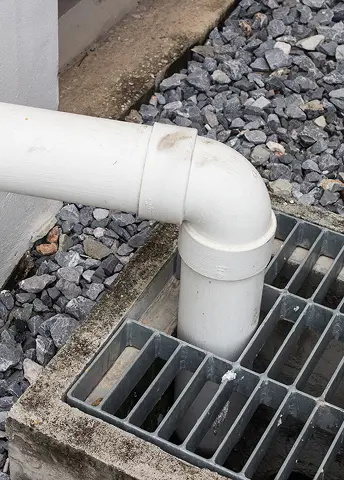 Direct Pipe
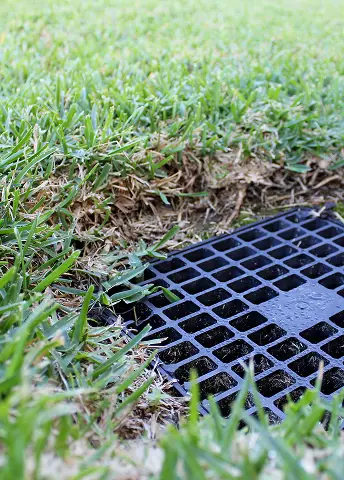
Downspout drains can clog with debris, so the grate can easily be removed to clean the clog.
-
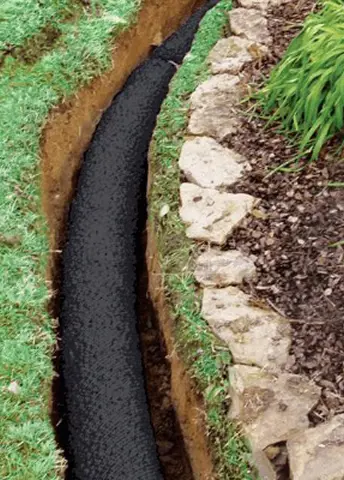 French Drains
French drains are rock-covered trenches, that lead water into a pipe. That pipe then redirects the water to a more desirable location, or disperses it so there is no standing water in your yard.
-
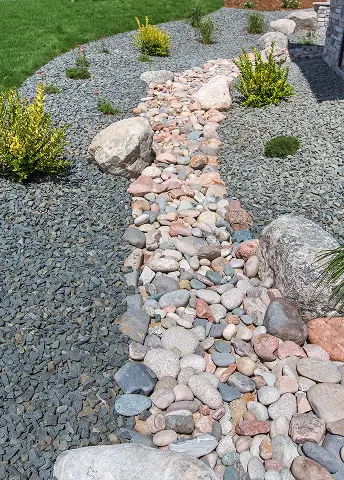 Dry Creek Beds
Dry creek beds are a great solution for properties with shaded areas and little slope. They move large amounts of water, cut down on erosion, and can prevent soil movement, while also being effective and aesthetically pleasing. Conserva offers design options that range from simple to elaborate.
-
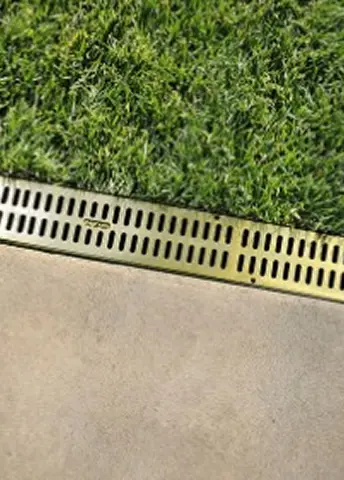 Channel Drains
Channel drains are commonly uses to keep driveways, patios, and pool decks free of standing water. These drains include long grates that collect water and move it through underground trenching.
-
 Downspout Drains
Downspout drains connect to your gutter system and are designed to move water away from the house. Downspout drains can be custom to your property, as some need extensions or underground drain lines to prevent pooling water.
-
 Downspout Catch Basin
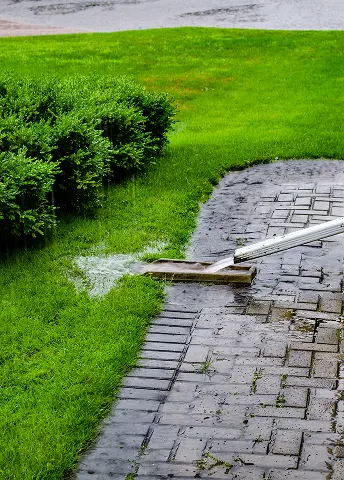
A downspout and grate combination is used when it is likely that debris will be caught in your drainage system. Trees that hang over your home will lead Conserva to determine you need this component.A downspout and grate combination is used when it is likely that debris will be caught in your drainage system. Trees that hang over your home will lead Conserva to determine you need this component.
-
Downspout Defender Catch Basin
The downspout defender catch basin utilizes an angled grate to ensure that no debris from your roof enters your drainage system.The drainage defender utilizes an angled grate to ensure that no debris from your roof enters your drainage system.
-
 Pop Up Emitters
Pop up emitters are used to transfer runoff water away from the foundation of your home.


-
1Free InspectionWe evaluate your current setup and create a System Efficiency Score to identify exactly what's working and what's wasting water.
-
2Fix the Urgent StuffOur experts fix critical issues first, prioritizing repairs that will have the biggest impact on water savings and system performance.
-
3Optimize PerformanceWe fine-tune sprinkler placement, adjust nozzles, and ensure even water distribution across your landscape for maximum efficiency.
-
4Upgrade TechnologyReplace outdated timers with intelligent controllers and sensors that reduce water usage by 40-60% while keeping your lawn healthy.
-
5Keep Things WorkingChoose from our maintenance plans to ensure your system stays efficient year after year, protecting your investment and savings.
-
 What's Your Water IQ?Water is one of the earth's most abundant resources, yet it's also one of the most precious and unfortunately, one of the most often wasted. To understand our passion for water conservation, consider these facts.
 -
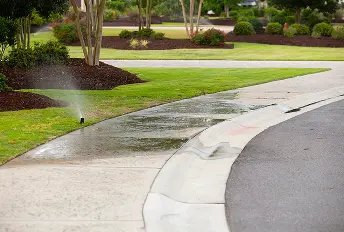 Products & PartnershipAt Conserva Irrigation®, we pride ourselves on offering the best irrigation and water conservation products available. That's why we're happy to partner with Toro and Hunter, the leaders in turf and landscape maintenance. We work together to bring you beautifully green lawns with less waste.
 -
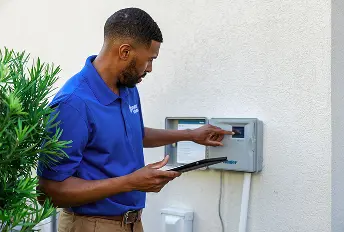 Hunter Hydrawise ControllerThe Hunter Hydrawise Wi-Fi Controller is the most advanced sprinkler system controller on the market. The Hydrawise controller uses real-time local weather data to automatically adjust your watering schedule, so your yard gets watered only when it's needed and never when it's not.